Abou El-Enein:
- Today, we are facing a new type of conflict that knows no borders and recognizes no nation.
- We are living through a complex human struggle centered on ideas and culture, where challenges are intertwined in unprecedented ways.
- We face a critical challenge that requires awareness and action.
- The foundation of our progress is a new way of thinking that we must lead ourselves rather than have imposed upon us from abroad.
- Artificial Intelligence is a historic opportunity to overcome development barriers and build a knowledge-based economy.
- The misuse of Artificial Intelligence could transform it into a genuine threat to humanity.
- Warfare has already entered the age of Artificial Intelligence, and battlefields have become testing grounds for these technologies.
- Can we allow technologies with no conscience to decide who lives and who dies?
- The promise is immense, but the risks are even greater—the difference lies in governance.
- Will we guide this technology according to our values, or will it lead us away from our humanity?
- The rules of Artificial Intelligence are being written today, and the Mediterranean region must play an active role in shaping them.
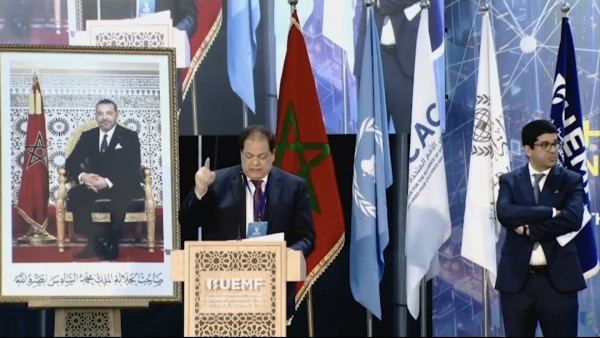
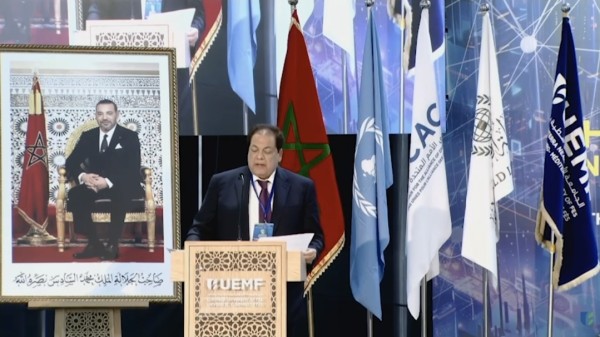
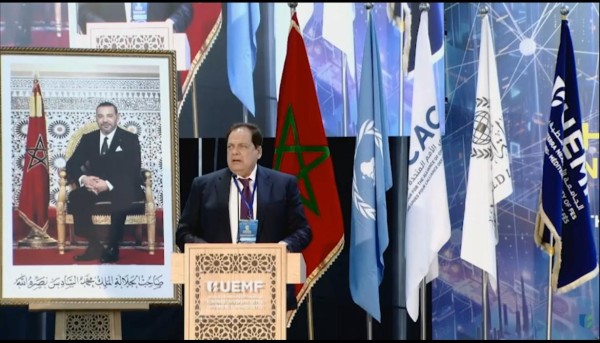
MP Mohamed Abou El-Enein, Member of the Egyptian House of Representatives and President of the Parliamentary Assembly of the Union for the Mediterranean (PA-UfM), emphasized the importance of responding wisely and responsibly to global transformations, particularly those related to Artificial Intelligence technologies. He stressed the need to establish effective governance frameworks to ensure that these technologies serve humanity rather than threaten it.
Abou El-Enein began his address at the Euro-Mediterranean Universities Forum in the city of Fez, Morocco, by extending his appreciation to the Kingdom of Morocco—its King, government, and people—for their warm hospitality and generous welcome. He also praised the historic city of Fez as one of the jewels of Mediterranean civilization, distinguished by its rich cultural and historical heritage.
He noted that the world is facing a new type of conflict that transcends borders, nations, ideologies, and religions. It is, he explained, a complex human struggle centered on ideas and culture, where challenges intersect and evolve in unprecedented ways.
The President of the Parliamentary Assembly of the Union for the Mediterranean pointed out that while the region possesses an extraordinary civilizational legacy—from the ancient Egyptian civilization to the Moroccan, Islamic, and broader Mediterranean civilizations—it nevertheless faces a defining challenge that requires awareness, preparedness, and collective action.
Drawing on more than two decades of experience since helping establish Euro-Mediterranean cooperation, Abou El-Enein recalled that during his tenure as Chair of the Committee on Economic and Financial Affairs and Education, one of the earliest strategic decisions was the establishment of the Euro-Mediterranean University, reflecting a firm belief in the transformative role of education and knowledge in shaping the future.
He stressed that genuine progress can only be achieved through a new way of thinking that emerges from within societies themselves rather than being imposed from outside, describing intellectual renewal as the true foundation of development and advancement.
Abou El-Enein added that he was speaking not only in his parliamentary capacity but also as a father and grandfather concerned about future generations and the challenges posed by a rapidly changing world, particularly in light of the growing influence of media platforms and social networks on young people’s awareness and values.
He emphasized that Artificial Intelligence represents a historic opportunity to overcome development obstacles, build a knowledge-based economy, and achieve transformative progress in education, agriculture, industry, and economic growth. At the same time, he warned that the misuse of AI could pose a serious threat to humanity through manipulation of public awareness, the spread of disinformation, the erosion of democratic processes, the reinforcement of domination and inequality, and its potential use in warfare and organized crime.
He further noted that warfare has already entered the age of Artificial Intelligence, with battlefields increasingly becoming laboratories for testing and deploying advanced AI technologies, as evidenced by several ongoing conflicts around the world.
Abou El-Enein raised a fundamental question: “Should we allow technologies without conscience to determine who lives and who dies?” He stressed that the difference between the enormous opportunities offered by AI and its potentially devastating risks lies in effective governance and responsible oversight.
He explained that the question is no longer whether Artificial Intelligence will change the world, as that transformation is already underway. The more important question, he argued, is whether humanity will guide this technology according to its values and principles, or whether technology will lead humanity away from its ethical foundations.
He stressed that the rules governing Artificial Intelligence are being written today and that the Mediterranean region—which has historically contributed to shaping human civilization—must play a meaningful and influential role in drafting those rules and establishing global standards.
Abou El-Enein presented eight key pillars for addressing the challenges and opportunities of AI. These included preventing technology from being left solely to market forces, ensuring that AI remains human-centered, maintaining full human control and accountability for its consequences, and guaranteeing citizens’ right to transparency.
He also called for ensuring equitable access to technology, preventing its use as a tool of domination or digital colonialism, protecting employment and human dignity through investment in education and continuous reskilling, preserving cultural and linguistic identities, and safeguarding children from becoming testing grounds for emerging technologies.
Furthermore, he proposed the launch of a Mediterranean Charter on Artificial Intelligence with the participation of all countries in the region, as well as the establishment of a permanent committee dedicated to Artificial Intelligence and digital sovereignty within the framework of the Parliamentary Assembly of the Union for the Mediterranean.
Addressing young people directly, Abou El-Enein emphasized that they are not merely witnesses to this transformation but its true architects. He encouraged them to take the lead in shaping and guiding these technologies for the benefit of humanity.
Concluding his remarks, he stressed the importance of ensuring that the forum produces tangible outcomes and a clear action plan with defined timelines and responsibilities, rather than limiting its results to recommendations that fade away once the event concludes.