MP Mohamed Abou El-Enein in His Address to the National Council of Arab American Policymakers:
-
The declaration of the US-Russia-China World Leaders’ Summit overlooked key issues, foremost among them the Palestinian cause.
- My message to world leaders: The Palestinian people are heroes and have the right to an independent state and a dignified life.
- Presidents Abdel Fattah El-Sisi and Donald Trump succeeded in bringing the war in Gaza to a halt… We fear that these efforts may go to waste.
- I am very pleased with the US Congress’s tribute to President Sadat and its recognition of his historic role in making peace, which has endured for 47 years and continues to this day.
- Egypt has suffered from externally imposed crises and incurred substantial losses in the aftermath of the COVID-19 pandemic and as a result of wars in the region.
- The Gulf region is an integral part of our national security… We will not allow anyone to attack our brothers.
- Despite the challenges, Egypt’s economic growth rate has exceeded 5%, while its tourism sector is achieving record-breaking results.
- The River Nile is our right and our dignity. It is a red line for every Egyptian.
- Saudi Arabia’s security is an integral part of our own… It is the land of Makkah and Madinah, which we are prepared to protect with our lives.
MP Mohamed Abou El-Enein, Member of the House of Representatives, reaffirmed the Palestinian people’s right to establish their independent state and live in dignity, expressing his concern that the efforts undertaken by Presidents Abdel Fattah El-Sisi and Donald Trump to halt the war in Gaza and rebuild the Strip could be squandered.
He also praised the US Congress for honouring late President Mohamed Anwar El-Sadat in recognition of his historic role in achieving peace, which has endured for 47 years.
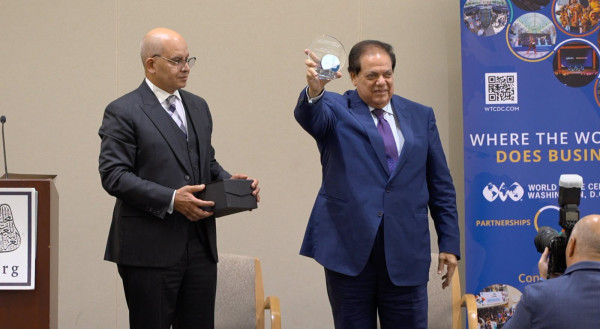
These remarks came during an important address delivered by MP Mohamed Abou El-Enein before the National Council of Arab American Policymakers in Washington. His speech addressed the declaration of the summit bringing together the leaders of the United States, Russia and China, highlighting its omission of the Palestinian cause. He stressed the Palestinian people’s right to establish their independent state and live a dignified life.
He further underscored that the River Nile constitutes a red line for Egypt’s national security, and that the security of the Gulf region and Saudi Arabia is an inseparable part of Egypt’s national security. He also reviewed the economic challenges Egypt has faced since the COVID-19 pandemic and throughout successive regional conflicts, highlighting the country’s achievement of an economic growth rate exceeding 5%, alongside record-breaking performance in the tourism sector.
A Historic US-Russia-China Summit… The Omission of the Palestinian Cause Raises Concerns
In his address, MP Mohamed Abou El-Enein described the meeting of US President Donald Trump, Russian President Vladimir Putin and Chinese President Xi Jinping on the same day as a significant and historic event, noting that this was the first time in history that the three leaders had convened at such a critical juncture.
He pointed out that their discussions resulted in a declaration comprising four important points.
However, he expressed regret that the declaration overlooked an issue of paramount importance: Gaza and the Palestinian cause. In this context, he recalled the events of a year earlier, when President Trump visited Sharm El-Sheikh and participated in what he described as a landmark initiative alongside President Abdel Fattah El-Sisi, Turkish President Recep Tayyip Erdoğan and His Highness Sheikh Tamim bin Hamad Al Thani, Emir of Qatar. The leaders reached an understanding on ending the war and began charting a roadmap for the future.
He explained that this roadmap gave the Palestinian people a glimmer of hope following the widespread destruction inflicted on Gaza and the killing of more than 100,000 people. It also opened the door to the beginning of reconstruction. However, he noted that the Peace Council had surprised everyone just a few days earlier by announcing that nothing had been achieved.
He warned that this situation places the region before a serious challenge and raises concerns that the efforts undertaken to achieve peace could ultimately go to waste.
Abou El-Enein added:
“My message to world leaders is clear: The Palestinian people have the right to build their own state. They have the right to live a dignified life. They should not be left in tents, exposed to the rain during the winter. The Palestinian people are heroes, and the world has witnessed that over the past two years.”
Egypt Reaffirms Its Commitment to Protecting Gulf Security and Rejects Attacks Against Its Arab Brothers
MP Mohamed Abou El-Enein stressed that the security and stability of the Gulf region constitute an inseparable part of Egypt’s national security. He affirmed that Egypt will not allow its brothers and neighbours in the region to be subjected to attacks, emphasising that Egypt’s position on safeguarding the security and stability of the Gulf remains clear and unwavering.
He noted that Egypt regards the Gulf countries as brotherly nations, whose peoples are family and neighbours, stressing:
“The security and stability of the Gulf region are part of our national security. This is the firm resolve declared by President Abdel Fattah El-Sisi, by Parliament and by the Egyptian people. These are our own people, our brothers and our neighbours, and we will never allow anyone to attack them.”
He further pointed out that the region had witnessed attacks by the Houthis and other groups targeting the Gulf over the past period, underscoring the need for a clear position from the international community to safeguard regional security and stability and prevent the escalation of conflicts and threats affecting the region’s peoples and resources.
He also stated:
“Saudi Arabia’s safety and security are part of our national security. We will never forget this country, which is home to Makkah and Madinah. It is part of our very soul, and we must protect it.”
Egypt’s Losses Exceed $20 Billion Due to Externally Imposed Regional Crises
Abou El-Enein reviewed the scale of the economic burdens borne by Egypt as a result of successive regional and international crises. He explained that, since 2019, the country had faced a series of crises that were not caused by domestic circumstances, beginning with the COVID-19 pandemic, followed by the Russia-Ukraine war, the war in Gaza, developments in the Bab El-Mandeb region, and the war involving Iran.
He stated:
“Over the past six years, Egypt has suffered from externally imposed crises. COVID-19 came in 2019, followed by the war in Ukraine, which was also an external crisis. Then came the war in Gaza, followed by the developments in Bab El-Mandeb and the war involving Iran. All this has cost Egypt billions of dollars. Our losses have exceeded $20 billion. The Suez Canal is suffering, and security and stability in the region are far from being at their best.”
He noted that these developments had directly affected the Egyptian economy and international maritime traffic, particularly as security tensions in the region had affected the Suez Canal. He emphasised that restoring regional stability is an economic and political necessity for the countries of the region and the wider world.
Egypt’s Urban Development Footprint Expanded from 6% to 14% in Ten Years
Abou El-Enein also highlighted the scale of the development transformations Egypt has undergone over the past decade, inviting members of the National Council of Arab American Policymakers to visit Egypt and witness first-hand the achievements on the ground.
He stressed that their visit should not be limited to seeing the Grand Egyptian Museum, but should also provide an opportunity to explore modern Egypt and its ongoing development projects.
He said:
“You can see what is happening in Egypt today. I am very pleased, and I wish the video could be presented with a different voice-over so that we could better understand its content. I deliberately chose to show it as an invitation to all of you to come and see Egypt—not just to visit the museum, but to discover modern Egypt.”
He added:
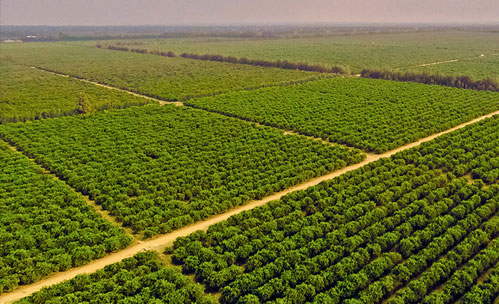
“Let me share some figures with you. Throughout history, Egyptians lived along the banks of the Nile, occupying just 6% of Egypt’s territory, while the rest of the country was desert. Over the past ten years, we have increased this percentage to 14%—more than doubling it in just a decade. It is set to rise further to 20%, creating tremendous opportunities for investors.”
He explained that this urban expansion, coupled with infrastructure development, opens up extensive opportunities for foreign investment. He noted that Egypt has become a strategic gateway to major markets across Africa and the Middle East, offering diverse investment opportunities to international companies.
He continued:
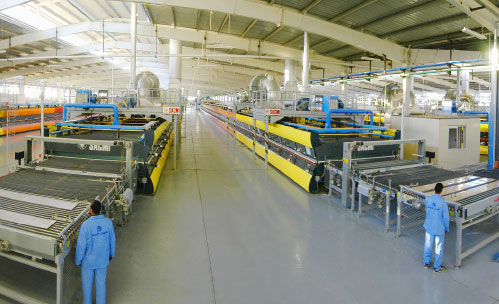
“Chinese investors are coming to Egypt, bringing substantial investments in infrastructure. Europeans are coming to manufacture, establish industries, develop industrial zones, build factories and create jobs—not only for their own markets, but also for the African market and the Middle Eastern market, which together exceed one billion people.”
Economic Growth Exceeds 5%, with 19 Million Tourists and $18 Billion in Tourism Revenues
Abou El-Enein reviewed several economic indicators reflecting the performance of the Egyptian economy, emphasising that Egypt had managed to overcome numerous challenges and crises affecting the region, achieving an economic growth rate exceeding 5%, alongside strong results in the tourism sector.
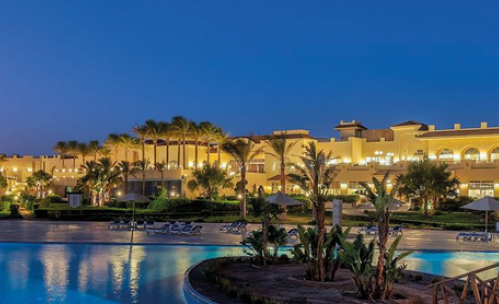
He stated that Egypt had welcomed approximately 19 million tourists, generating tourism revenues of $18 billion during the period under discussion, noting that the private sector accounted for 80% of these revenues.
He added that Egypt welcomes American investment and is keen to benefit from the expertise and advanced technologies of US companies, particularly in artificial intelligence, cybersecurity and advanced technology. He stressed that cooperation in these fields could open new horizons for economic partnership between the two countries.
He also pointed out that Egypt occupies a strategically important position in telecommunications and data transmission, with approximately 90% of internet traffic travelling from Europe to Asia passing through Egyptian territory, in addition to 17% of the world’s total submarine cables. This, he noted, further strengthens investment opportunities in technological and digital infrastructure.
The River Nile Is a Red Line… Abou El-Enein: We Will Never Relinquish Our Water Rights
Addressing the water issue, Abou El-Enein stressed that the River Nile represents an existential issue and a matter of national security for Egypt. He emphasised the need to respect Egypt’s historical and legal rights to the river’s waters and to refrain from taking unilateral measures or implementing new projects that could affect Egypt’s water share.
He stated:
“We have rights in the River Nile, and Egypt remains committed to the agreements governing the use of Nile waters.”
He referred in particular to the 1959 agreement, which allocated Egypt an annual share of approximately 55 billion cubic metres of water at a time when its population stood at around 30 million, whereas the population has now exceeded 110 million, with the same water allocation remaining unchanged.
He continued:
“Today, we have a population of 110 million, yet we still receive the same quantity of water. This is not fair. The River Nile is our life and our dignity. We will never allow our rights to be taken away, and we will insist on receiving our full entitlement. This is a red line for every Egyptian. It directly concerns Egypt’s national security, and the region needs to return to stability.”
President Sadat Honoured by the US Congress… 47 Years of Peace Forged Through Political Will
The Member of the House of Representatives praised the US Congress for honouring late President Mohamed Anwar El-Sadat in recognition of his historic role in making peace. He stressed that the peace agreement achieved with the participation of former US President Jimmy Carter has endured for 47 years, demonstrating the importance of leadership and political will in bringing conflicts to an end.
Abou El-Enein expressed his pleasure at the US Congress’s tribute to the late Egyptian President, noting that El-Sadat was a leader of dignity and a man deeply committed to peace, who, through his vision and decisions, laid the foundations for a new era of relations and peace.
He added:
“With his dignity and his unwavering belief in peace, President Sadat came to the United States alongside President Carter, and together they made a peace that has lasted for 47 years.”
He continued:
“There must be leadership, determination and a clear path forward, along with respect for what we sign and what we commit ourselves to.”
He emphasised that genuine political will is the fundamental driving force behind achieving peace, adding that the world today needs leaders capable of making serious decisions and honouring their commitments and agreements.
Eighty Years of Egyptian Efforts to Support the Palestinian Cause
Abou El-Enein reaffirmed Egypt’s continued commitment to supporting the Palestinian cause, noting that Egypt has been making sustained efforts for approximately 80 years to stand by the Palestinian people and assist the various parties through mediation and dialogue to achieve peace and bring the conflict to an end.
He stated:
“For the past eighty years, Egypt has exerted tremendous efforts in support of the Palestinian cause, helping and mediating between all parties to achieve peace.”
He stressed that Egypt’s initiatives on the Palestinian issue are an extension of its longstanding and unwavering position in support of the Palestinian people’s rights, and its commitment to creating the necessary conditions for a just and lasting settlement.
He also underscored the importance of continued international efforts, stressing that initiatives and declarations alone are not enough without concrete steps and tangible action on the ground.
Abou El-Enein Warns Against Squandering Opportunities to End the War in Gaza and Rebuild the Strip
Commenting on developments in the Gaza Strip, Abou El-Enein expressed concern that the efforts and initiatives undertaken over the past period to end the war and pave the way for reconstruction could be wasted, warning that continued setbacks could undermine the hopes raised by peace efforts.
He noted that the Peace Council’s recent announcement that no progress had been achieved reflects the scale of the challenges facing the peace process and raises serious questions about the future of the initiatives proposed to end the war and rebuild Gaza.
He stressed the importance of taking serious action to preserve the progress made through these efforts and initiatives, and of not allowing this opportunity—which has given the Palestinian people hope of ending their suffering and embarking on a new chapter based on peace, stability and reconstruction—to be squandered.
Abou El-Enein concluded by emphasising that regional stability is intrinsically linked to respecting the rights of peoples and safeguarding the national security of states. He reaffirmed that Egypt will continue its efforts to support peace and the Palestinian cause, while firmly upholding its water rights and standing by the security and stability of its fellow Arab countries, particularly the Gulf states.