In the Presence of Several African Leaders and Business Figures
Abou El-Enein:
-
President El-Sisi is building Egypt’s modern civilization and has successfully doubled the country’s inhabited land to 14%.
-
The success of Egypt’s private sector would not have been possible without the state’s support and encouragement.
-
Egypt’s achievements over the past decade stand as a model for many nations.
-
Africa possesses immense wealth that must be effectively promoted to build a new global investment brand for the continent.
MP Mohamed Abou El-Enein, Deputy Speaker of the Egyptian House of Representatives and Chairman of Cleopatra Group, participated in the 4th edition of the “Unstoppable Africa” Forum, organized by the Global Africa Business Initiative (GABI) on the sidelines of the United Nations General Assembly in New York.
The forum was inaugurated by UN Secretary-General António Guterres and attended by a large number of African leaders and senior officials, including João Lourenço, President of Angola and current Chair of the African Union; Duma Gideon Boko, President of Botswana; Nandi Ndaitwah, President of Namibia; Ngozi Okonjo-Iweala, Director-General of the World Trade Organization; Moussa Faki Mahamat, Chairperson of the African Union Commission; along with leading figures from global and African business communities and economic experts.
In his speech, Abou El-Enein presented Egypt’s successful development experience over the past decade, emphasizing that President Abdel Fattah El-Sisi has restored security and stability to Egypt despite regional turmoil, and is leading a bold national project to achieve a comprehensive economic transformation.
He highlighted that under President El-Sisi’s leadership, Egypt has doubled its inhabited land from 6%—which Egyptians lived on for thousands of years—to 14%, creating vast new horizons for development and adding high-value resources to the nation’s wealth.
Abou El-Enein also showcased Egypt’s achievements in infrastructure development, noting that over $500 billion has been invested in roads, ports, railways, and energy projects — investments that have boosted industrial activity, reduced production costs, and improved Egypt’s position in global infrastructure rankings.
He also referred to Egypt’s expansion in higher education, where the number of universities has increased from 50 to 128, including 7 international universities and 12 technological universities.
Abou El-Enein praised President El-Sisi’s “Digital Pioneers” initiative, which trains 5,000 young men and women every year in cutting-edge fields such as artificial intelligence, cybersecurity, data science, and software development.
He stressed that the success of Egyptian companies and the private sector would not have been possible without the state’s strong backing and pro-investment policies, adding that Egypt’s decade-long achievements stand as a model for many countries.
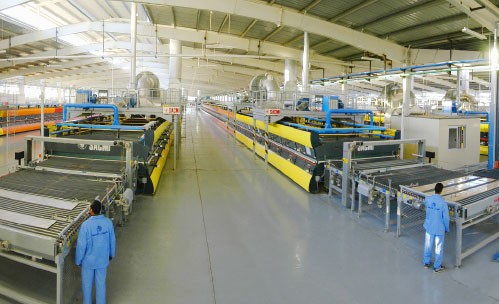
Abou El-Enein also highlighted Cleopatra Group’s success story, which began in the heart of Egypt’s desert and grew to become one of the largest industrial groups in its field worldwide.
He recalled that 40 years ago, he decided to establish a factory in the desert city of 10th of Ramadan, at a time when there was no infrastructure, financing, or technological know-how. Yet, with government policies encouraging private investment, he succeeded in increasing production tenfold within just three years, later expanding to 18 integrated factories exporting to over 100 countries and employing more than 30,000 workers.
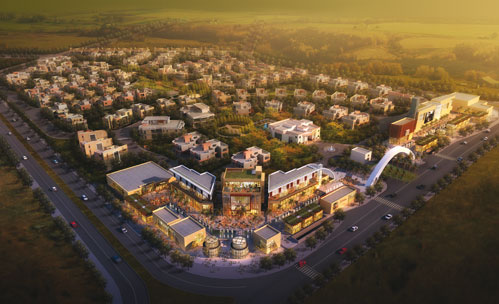
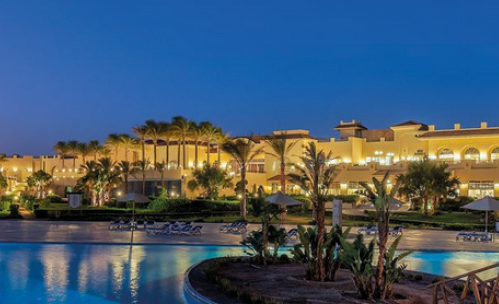
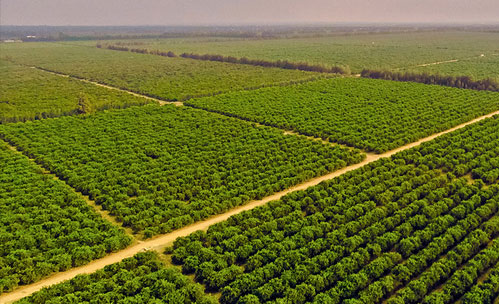
He added that he later expanded into agriculture, tourism, and real estate, supported by government incentives — such as offering tourism land at just one dollar per square meter, which helped attract large numbers of investors to Egypt’s unique tourism destinations on the Mediterranean and Red Sea coasts.
Turning to Africa, Abou El-Enein emphasized that the continent holds 40% of the world’s mineral resources and 30% of the critical minerals essential for AI and renewable energy industries, and that 60% of its population is under the age of 25, with enormous market potential.
He stressed that Africa’s true challenge lies in effective management and global promotion of its resources, calling for the creation of a new investment brand for Africa and the organization of a major investment conference to present 500 well-prepared investment opportunities to international investors.
He concluded by asserting that no investment can thrive without security, stability, strong infrastructure, and competitive production costs — the essential pillars for Africa’s sustainable growth and prosperity.